FLUX 3 Image vs Nano Banana 2, GPT Image 2.5, and Seedream 5
FLUX 3 Image is the strongest new option when composition control and targeted editing matter as much as the first render. Black Forest Labs gives it up to ten references, native 4K output, web grounding, and bounding-box controls that place or edit individual elements without rebuilding the whole frame.
It does not automatically replace Nano Banana 2 as our general fashion default. In our first matched Astria test, FLUX 3 produced the most naturally photographic frame, but Nano Banana 2 followed the requested off-balance diagonal pose more aggressively and completed faster. GPT Image 2.5 Sunburst was the fastest tested endpoint, while Seedream 5 Pro remains the specialist we would start with for difficult color and fabric texture.
This is a one-brief qualification of the current endpoints, not a universal ranking.
Reviewed October 4, 2026.
The short comparison
| Model | Best reason to choose it | References and editing | Maximum native output in the reviewed API | Observed server time* |
|---|---|---|---|---|
| FLUX 3 Image | Box-directed layouts, precise local changes, natural editorial realism | Up to 10 references; generate and edit through one endpoint; bounding-box placement and element-level edits | 4K, about 16 megapixels | 87.3 s |
| Nano Banana 2 | Best all-around balance for high-volume fashion and product work | Multi-turn generation and editing; up to 14 references across supported object and character roles | 4K | 32.3 s |
| GPT Image 2.5 Sunburst | Precise editing, beauty, text, designed layouts, and flexible output controls | Text and multiple image inputs; generation and editing; masks, transparency, and low-to-max quality controls | 4K, within the documented custom-dimension limits | 24.6 s |
| Seedream 5 Pro | Difficult fabric, saturated color, realistic material response, and design workflows | Multi-image fusion; point, lasso, box, and sketch-guided edits; layer separation | 2K in the current official API | 55.4 s |
*One simultaneous reference-led request per model through Astria, measured from the recorded server start to completion. These are small-sample observations, not latency guarantees. Queueing, quality settings, resolution, region, and provider load can change the result.
The capability rows come from the current Black Forest Labs FLUX 3 documentation, Google Gemini image guide, OpenAI image-generation guide, and ByteDance Seedream 5 Pro announcement. A native model capability is not a promise that every partner interface exposes every control.
What FLUX 3 Image actually is
FLUX 3 is Black Forest Labs' multimodal foundation-model family. FLUX 3 Image is the image-generation and editing part of that family, released on October 1, 2026. It is separate from FLUX 3 Video, even though both share the FLUX 3 name and underlying multimodal direction.
The image endpoint has five useful production ideas:
- one prompt can generate a new image or describe an edit;
- one request can combine up to ten image references;
- an element table with coordinates can place subjects, products, panels, or type inside explicit bounding boxes;
- the same boxes can target several local edits while leaving unmentioned elements locked;
- output runs from a quick square preview through 1K, 1.5K, 2K, and 4K, with web and image grounding available.
Black Forest Labs also offers commercial-weight licensing for companies that want to fine-tune and deploy FLUX 3 Image on their own infrastructure. That makes the family relevant beyond a hosted creative tool, although licensing, serving, and workflow costs need a separate procurement review.
In Astria, FLUX 3 appeared as public partner model 5811585 on October 2. It was available in the partner gallery at review time, but not yet in the curated popular-model selector returned by the live catalog. Browse the current FLUX 3 gallery.
The matched reference test
We reused the reference set and semantic prompt from the published GPT Image 2.5 qualification. All four models received the same Sloane portrait, pale-yellow sleeveless belted dress, circular-detail gold bag, 16:9 aspect ratio, 2K request, and one-output count in Astria workspace 896 (Articles).
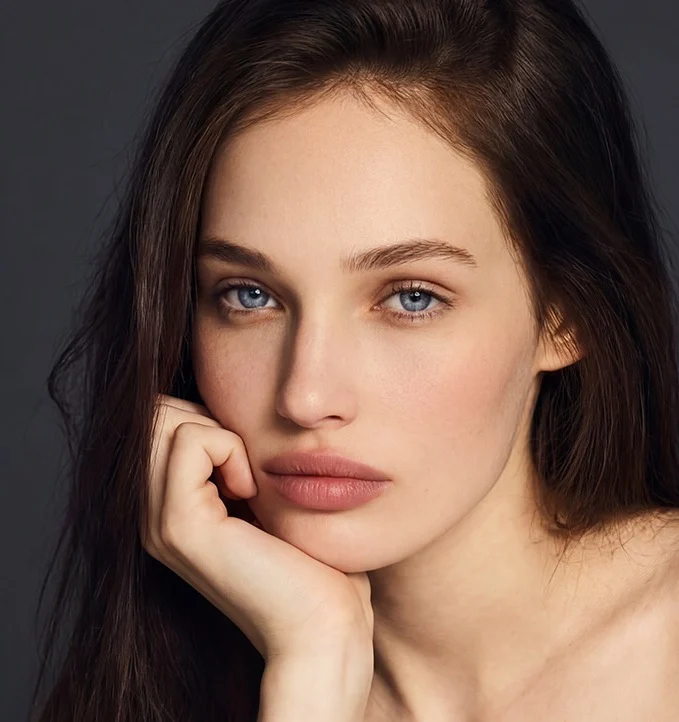
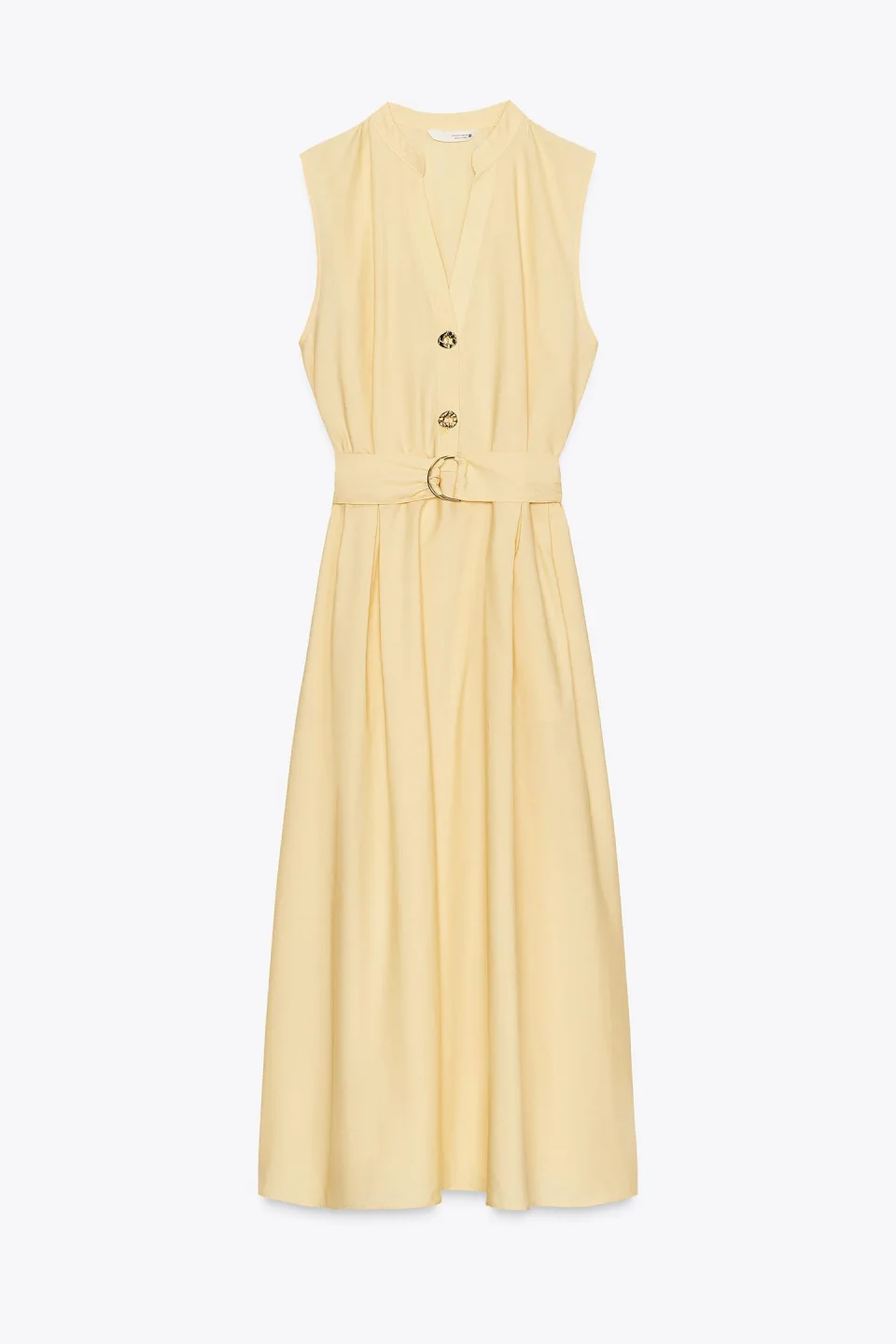
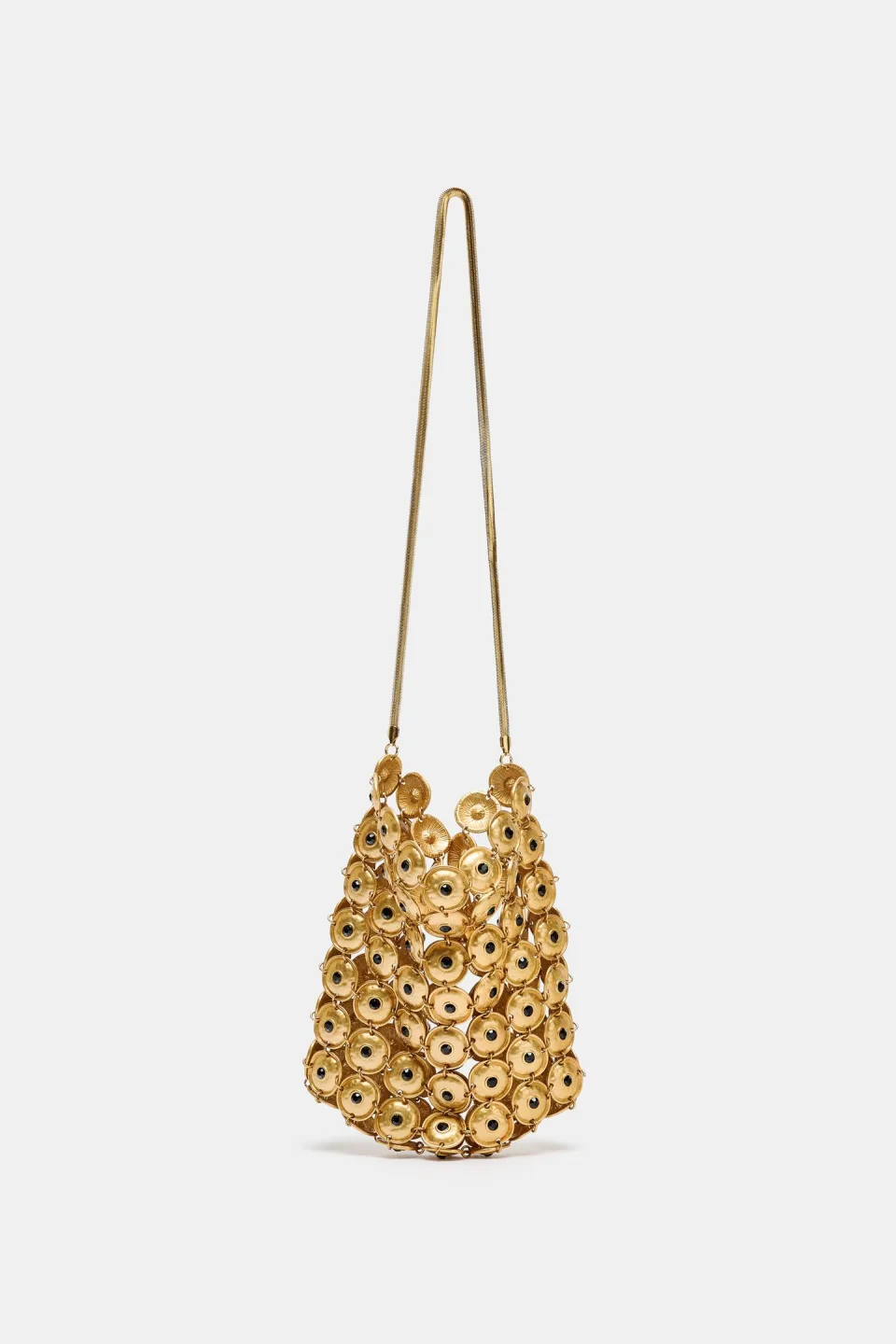
The dress and bag sources exceed 2K on the long edge. The supplied Sloane portrait is 679×722, below our preferred 1600-pixel source gate, and was not upscaled. Identity observations are therefore directional.
Prompt
Dress hero shot. An off-kilter, flash-lit photograph of the referenced woman in a dynamic, almost off-balance leaning pose against a dark wooden bar counter or pillar at night. Her body creates a diagonal line. She wears the reference dress and holds the reference bag. The strong flash casts a sharp shadow. Blurred shelves with bottles and bar lights define the out-of-focus background. Cool, edgy vibe.
Reference tokens are omitted above for readability. The generation records contain the exact Articles-workspace tune IDs.
The four outputs
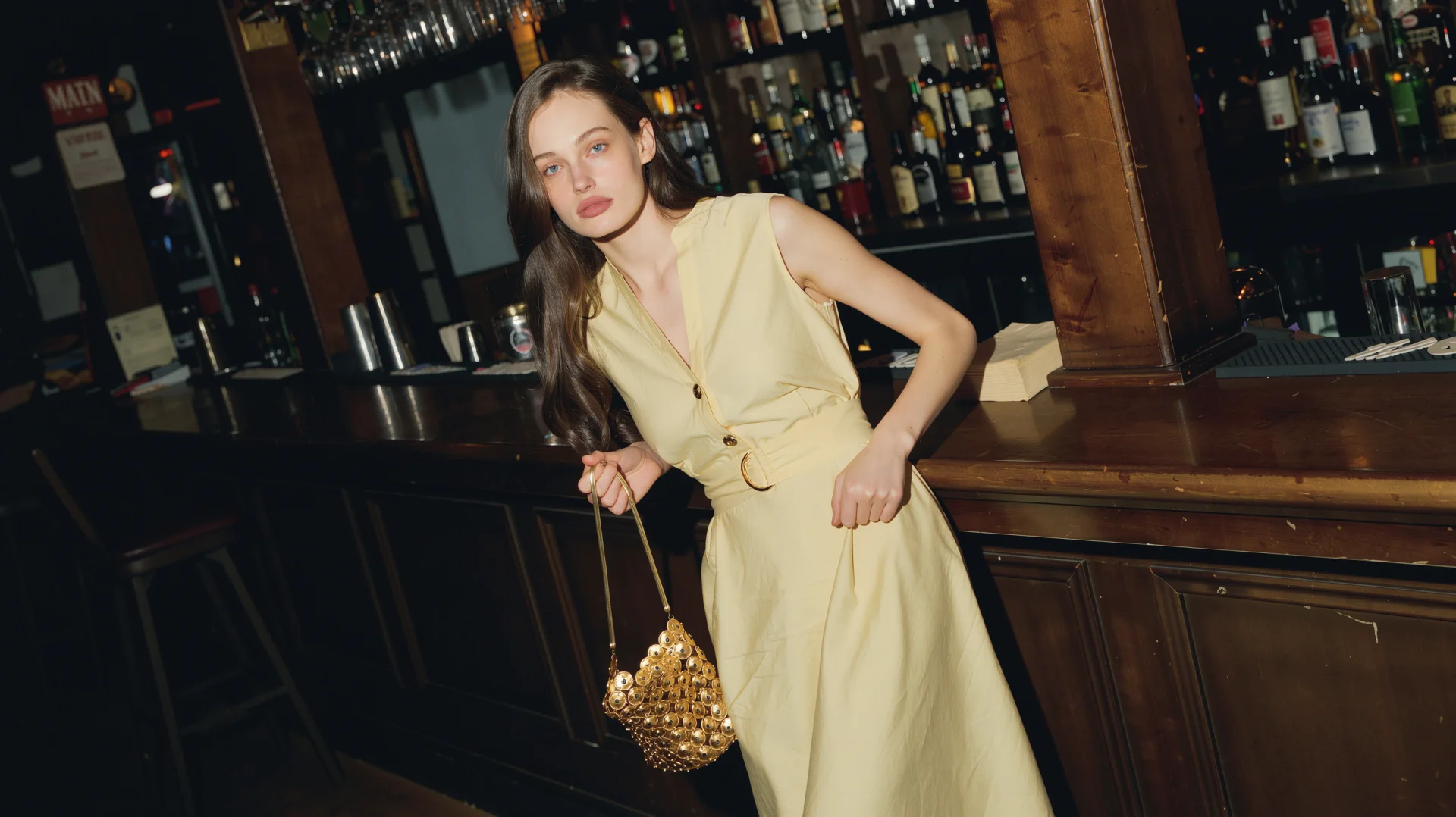
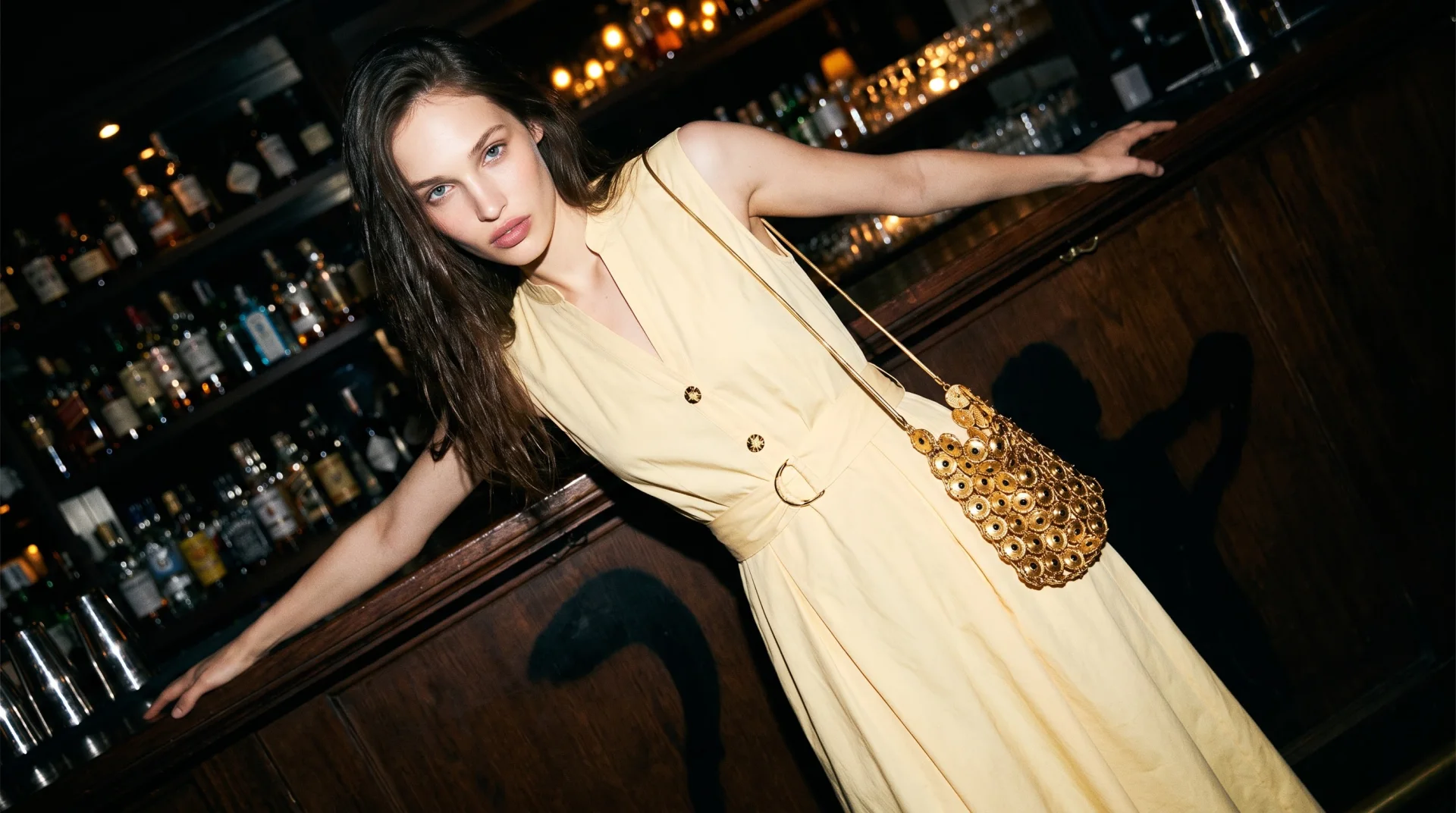
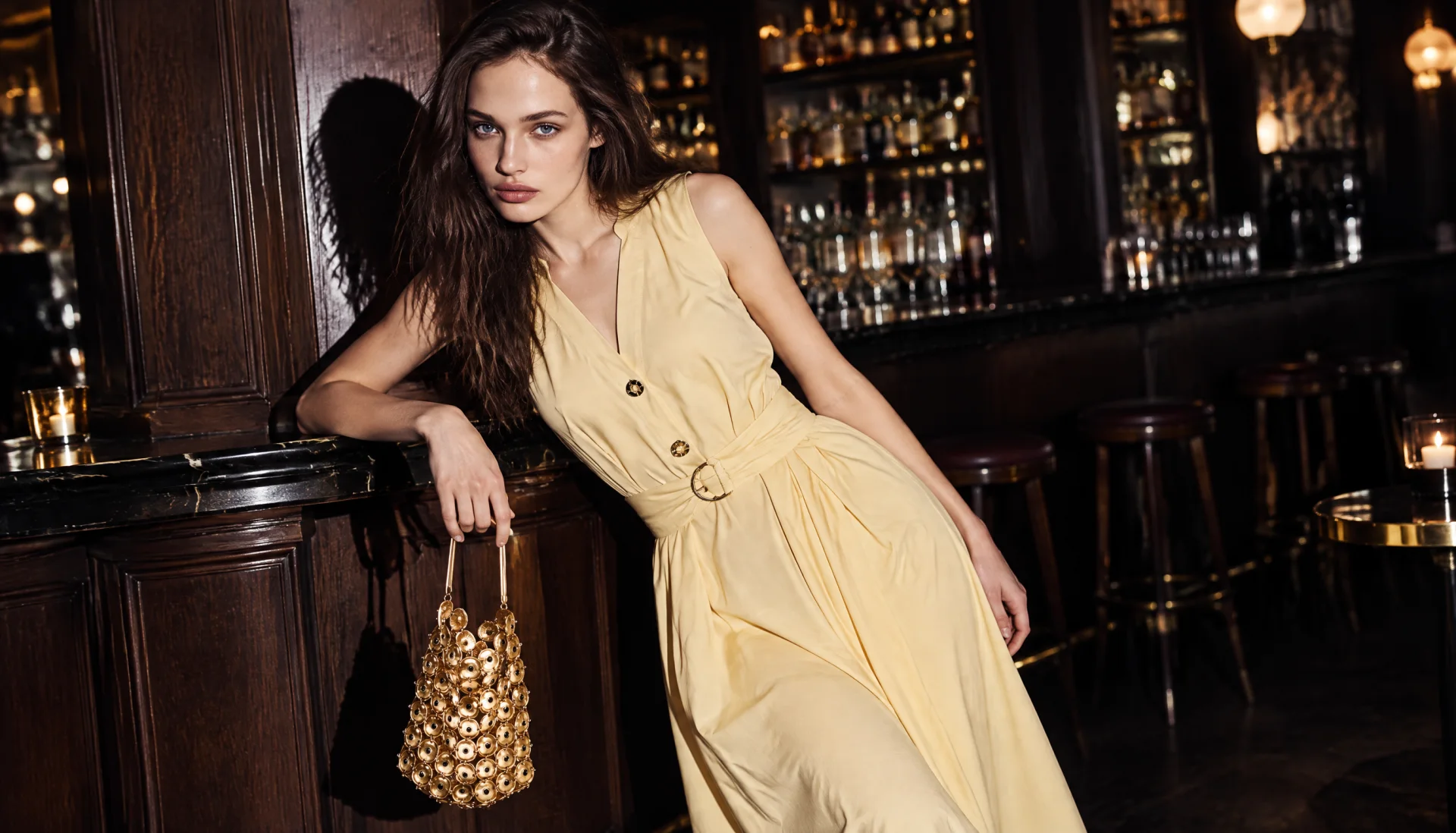
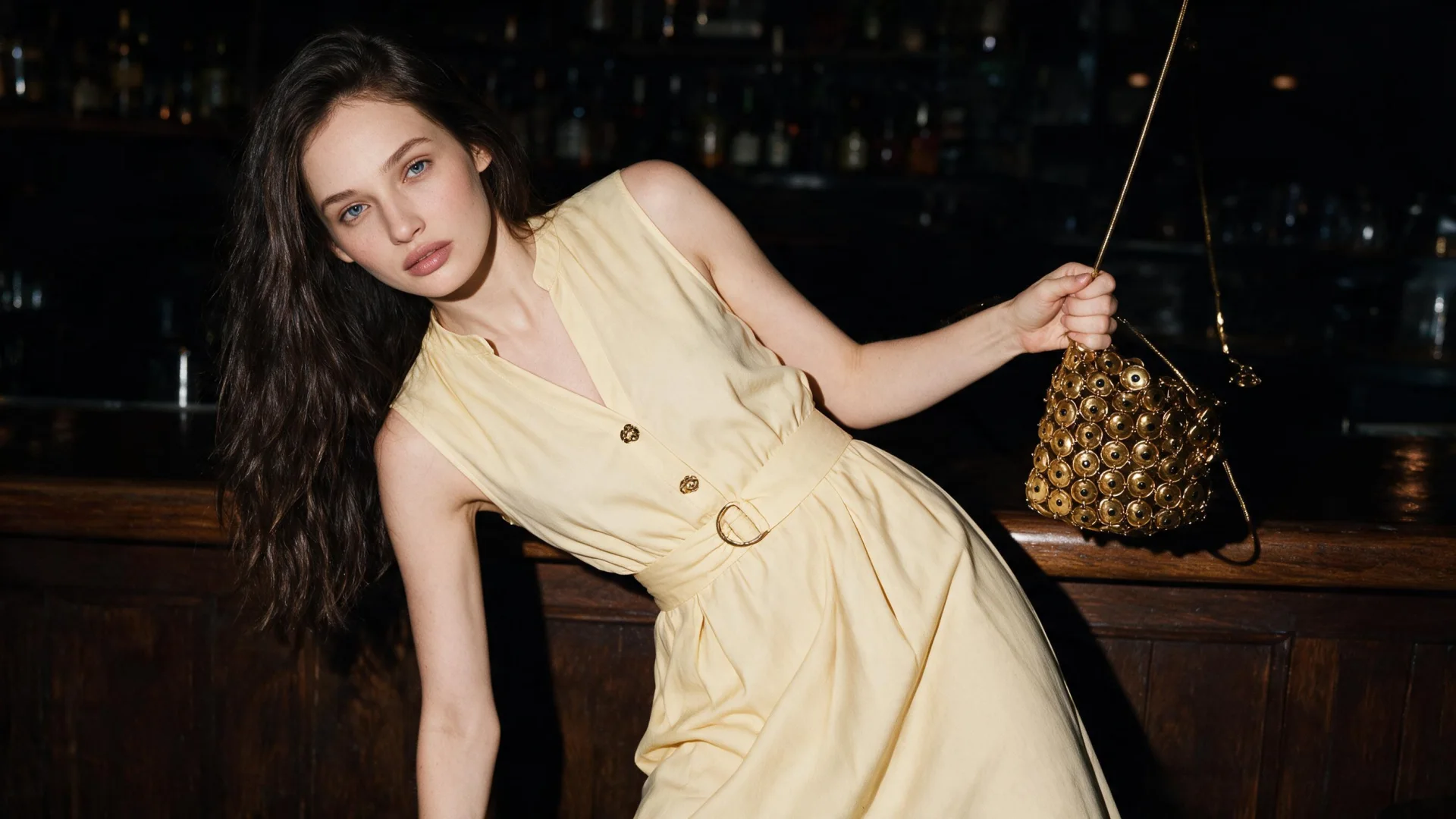
All four outputs pass the article-size visual gate. Every model preserved the pale-yellow sleeveless dress, two-button front, circular waist hardware, recognizable Sloane identity, gold chain bag, and dark bar setting. None should be treated as an exact SKU reconstruction: folds, belt wrap, bag-disc count, bag scale, and hand contact vary.
Image quality
FLUX 3 looks the least staged. The worn wood, background clutter, restrained skin texture, direct flash, and slight lens imperfection create a convincing location photograph rather than a perfectly cleaned campaign render. The face remains recognizable and the dress construction stays unusually legible. This is the frame we would choose when the art direction calls for candid editorial realism.
Nano Banana 2 produces the most forceful fashion composition. Its long diagonal body line, stretched arms, shadow, and bag placement make the “almost off-balance” instruction visible immediately. GPT Image 2.5 delivers a polished, product-legible frame but settles the pose against the pillar rather than pushing the requested instability. Seedream keeps the face, color, and overall campaign mood coherent, but the raised strap and the way it crosses the hand need retouching.
Prompt adherence and reference fidelity
There is no runaway winner in one image. Nano Banana 2 follows the pose and diagonal request best. FLUX 3 balances the scene instructions with the strongest naturalism and retains both dress buttons, the waist ring, the bag's circular surface, and the flash-lit bar. GPT Image 2.5 gives the bag and garment a clear commercial read, but interprets the pose more conservatively. Seedream preserves the key references while introducing the most distracting contact error.
For production, judge two questions separately:
- Does the image express the brief?
- Does the product remain accurate enough to approve?
The most attractive answer is not always the most faithful one.
Editing and reference-image support
FLUX 3's meaningful advantage is not that other frontier models lack image inputs. All four can generate from references and edit images. The difference is the control surface.
FLUX 3 Image
Use FLUX 3 when a brief contains explicit spatial relationships: a product in the lower-right, a headline in a reserved area, several people in fixed positions, or a multi-panel editorial. Its native layout prompt carries a global caption plus named elements and bounding boxes on a 0–1000 coordinate grid. Those same elements can be recolored, moved, replaced, resized, or removed while unmentioned elements remain locked.
That is more deterministic than asking a general conversational editor to “move the bag slightly left” and hoping the face, garment, and background do not drift. The matched Astria run above tests reference composition, not the separate bounding-box workflow; box precision remains a provider capability to qualify on the exact interface you plan to use.
Nano Banana 2
Nano Banana 2 is the most flexible generalist here. Google's current API supports multi-turn generation and editing, web and image-search grounding, and up to 14 references across documented object and character roles. It remains the model we would start with when a team needs one endpoint for ordinary campaign, catalog, product, and iterative editing work without designing a coordinate layout first.
GPT Image 2.5 Sunburst
GPT Image 2.5 is the strongest route when the work behaves like design: edit precision, readable type, flexible custom dimensions, transparent output, or an image built through several explicit changes. Sunburst is the higher-capability variant; Flare is the smaller option. OpenAI exposes low through max quality levels, so a fair speed or pricing comparison must hold quality and dimensions fixed.
Seedream 5 Pro
Seedream 5 Pro combines multi-image fusion with point, lasso, box, sketch, color, and material controls. It can also separate a finished design into independent transparent layers. That makes it especially relevant for posters and dense design work, while our wider Astria benchmark still gives it a specialist role for saturated garments, woven texture, skin, and repeated identity.
Resolution and speed
FLUX 3, Nano Banana 2, and GPT Image 2.5 all offer native 4K paths. Their limits are not identical: FLUX 3 describes 4K as roughly 16 megapixels, Google's dimensions vary with aspect ratio, and OpenAI constrains custom dimensions by edge length, aspect ratio, and total pixels. Seedream 5 Pro currently tops out at the 2K tier in its official image API.
Do not buy 4K as a label. Test whether the extra pixels preserve product geometry, typography, skin, and small accessories after export. A larger hallucination is still a hallucination.
In this single simultaneous Astria run, GPT Image 2.5 completed first, followed by Nano Banana 2, Seedream 5 Pro, and FLUX 3. FLUX 3's result justified the wait for this editorial brief, but the gap matters in live exploration. Use lower-resolution drafts when the endpoint offers them, approve composition early, and reserve the largest render for finalists.
Pricing: compare approved outputs, not sticker rates
The vendors use different billing units and quality controls, so a raw “price per image” comparison is easy to misread.
- Black Forest Labs prices FLUX 3 Image by output-resolution tier, with a materially larger step for 4K. See BFL pricing.
- Google meters Nano Banana 2 image generation through model input and image-output tokens, with output usage tied to resolution. See Gemini API pricing.
- OpenAI meters text, image input, and image output tokens; output dimensions and quality affect the practical total. See OpenAI API pricing.
- Volcengine prices Seedream 5 Pro outputs by resolution band and separately accounts for additional input images after the first. See Volcengine model pricing.
For the Astria route used in this comparison, use current Astria pricing.
The useful budgeting formula is:
approved-asset cost = total generation and editing spend ÷ number of outputs that pass reference, legal, and creative review
A slower or nominally higher-priced endpoint can still be cheaper if it removes retries and retouching. A fast draft model can still be the right first step when the team is exploring composition rather than approving a SKU.
Which model should you use?
Choose FLUX 3 Image when
- the composition contains several elements with strict spatial relationships;
- local edits must leave the rest of the frame stable;
- you want candid, natural editorial realism rather than a highly cleaned render;
- up to ten references need to become one deliberate composition;
- web-grounded real-world context or a self-hosted commercial-weights path matters.
Choose Nano Banana 2 when
- you need the safest general starting point for fashion and product work;
- speed, volume, references, editing, and 4K output all matter at once;
- the workflow is conversational and iterative rather than box-directed;
- the brief mixes creative art direction with product preservation.
Choose GPT Image 2.5 Sunburst when
- precise editing, beauty finish, typography, or a designed layout is central;
- transparent output or custom pixel dimensions matter;
- quality can be tuned explicitly against latency and budget;
- text and image inputs need to become a polished campaign asset.
Choose Seedream 5 Pro when
- saturated color, embroidery, weave, sheen, or skin rendering is the risk;
- point-, region-, or sketch-guided edits fit the design workflow;
- multi-image fusion or layer separation is more valuable than 4K delivery;
- a fashion brief has already shown that Seedream handles its material or safety constraints reliably.
Final verdict
FLUX 3 Image earns a place in the production shortlist immediately. Its combination of references, spatial layout, targeted editing, grounding, natural photographic character, and native 4K is genuinely differentiated.
For ordinary reference-led fashion work, start with Nano Banana 2 and add FLUX 3 when composition control or a less polished, more believable editorial surface is the opportunity. Add GPT Image 2.5 for design precision and Seedream 5 for difficult color and material. Then approve the model on your hardest real SKU rather than on a general leaderboard.
The exact prompt IDs, model IDs, timings, source provenance, delivered dimensions, and selection notes for this qualification are recorded in the repository benchmark manifest. Read the broader fashion image-model comparison, GPT Image 2.5 review, Seedream 5 guide, and benchmark methodology.
Sources and review boundary
This article compares public product information and live Astria endpoint behavior available on October 4, 2026. Primary sources are Black Forest Labs' FLUX 3 Image overview, October 1 release notes, and pricing page; Google's Nano Banana image guide and pricing; OpenAI's GPT Image 2.5 model page, image-generation guide, and pricing; ByteDance's Seedream 5 Pro announcement; and Volcengine's image API and model pricing. Provider capability claims are labeled as such; the visual verdicts and timings come from Astria's disclosed one-output matched run.